 EN
EN

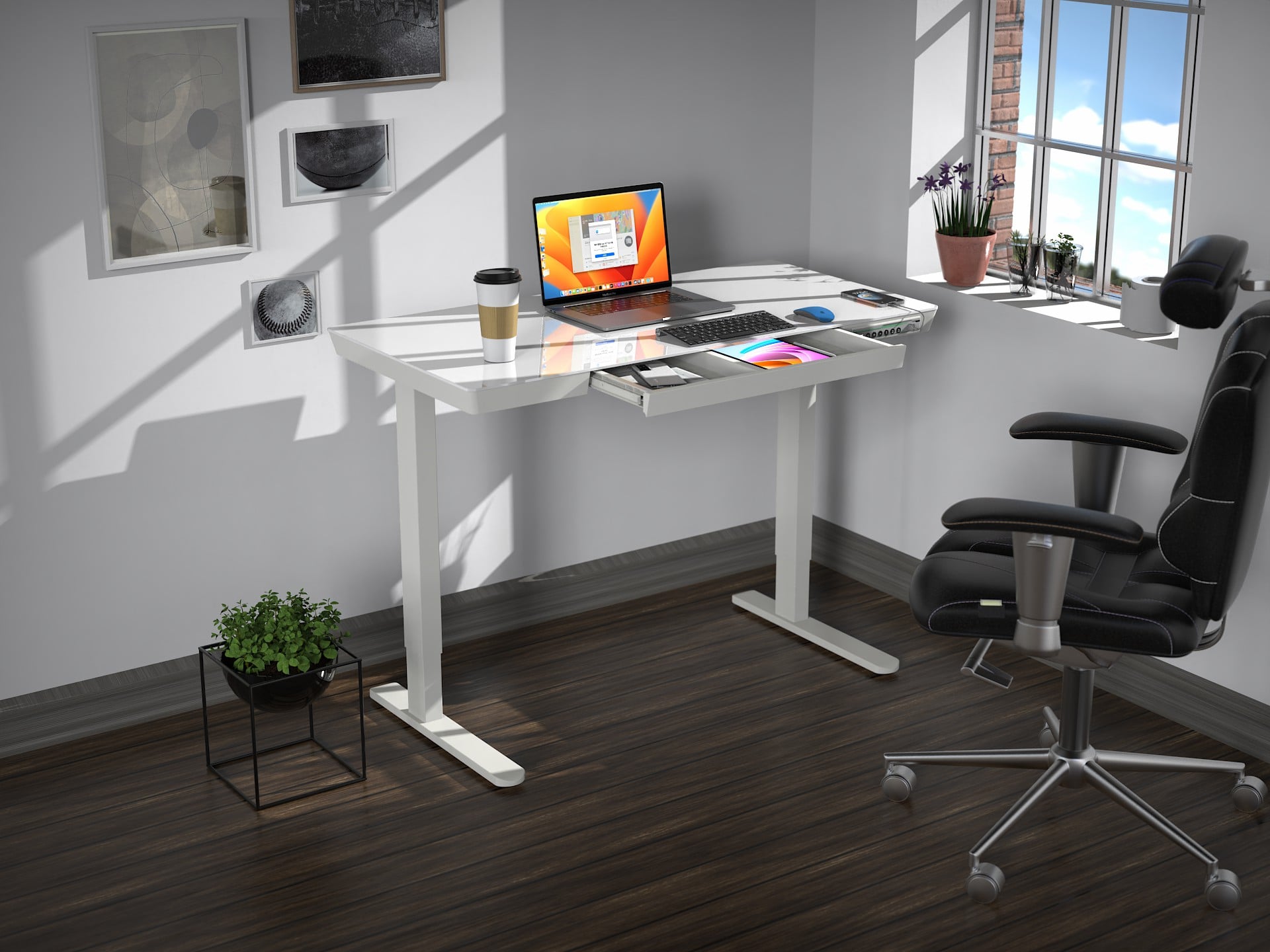
Finding the right height adjustable desk for your home office is one of the most impactful investments you can make in your daily work setup. As remote work becomes a permanent part of professional life for millions of people, the demand for ergonomic, functional, and stylish workspace furniture has grown considerably. A height adjustable desk—such as those from V‑mounts (Vision Mounts), a leading brand of ergonomic office furniture solutions specializing in monitor arms and standing desks, and distinct from V‑mount camera battery systems—gives you the flexibility to alternate between sitting and standing throughout the day, reducing physical strain while improving focus and productivity.
Choosing the best height adjustable desk for a home office, however, involves more than simply picking the one with the most features or the lowest price. You need to evaluate build quality, motor performance, surface materials, integrated functionality, and how well the desk fits your specific space and workflow. This guide breaks down everything you need to know to make a well-informed decision, covering what separates a truly great height adjustable desk from a mediocre one.
What Makes a Height Adjustable Desk Suitable for Home Offices
The Core Function of a Height Adjustable Desk in Daily Work
At its most basic level, a height adjustable desk allows the work surface to move up and down along a vertical axis, enabling the user to switch between sitting and standing positions without leaving their workspace. This capability addresses one of the most significant health concerns associated with modern office work: prolonged sedentary behavior. Research consistently links extended sitting with musculoskeletal discomfort, reduced circulation, and lower energy levels throughout the workday.
For home office users specifically, the height adjustable desk serves a dual purpose. It must function as a professional productivity tool while also fitting seamlessly into a living environment. Unlike corporate offices where ergonomic furniture is a standard provision, home workers typically choose their own equipment, making it all the more important to select a height adjustable desk that delivers genuine ergonomic value rather than just the appearance of it.
A high-quality height adjustable desk should reach a standing height that allows your elbows to rest comfortably at roughly 90 degrees when your arms are at your sides. It should lower to a sitting height that keeps your monitor at eye level and your wrists in a neutral position. These ergonomic targets are non-negotiable for a desk that will support long working hours day after day.
Home Office Context and Space Considerations
Home offices vary enormously in size, layout, and aesthetic. A height adjustable desk that works perfectly in a dedicated study may feel bulky in a bedroom corner or clash with a minimalist living space used as a work area. When evaluating which height adjustable desk suits your home, take careful measurements of the available footprint and consider how the desk's visual presence will interact with the rest of the room.
Surface dimensions matter significantly. A desk that is too narrow will not accommodate dual monitors, a laptop stand, and peripheral devices comfortably. On the other hand, an oversized desk in a compact room creates a cramped environment that undermines the focus and clarity you are trying to achieve. Most home office users find that a surface between 120 cm and 160 cm in width strikes the right balance between workspace area and spatial efficiency.
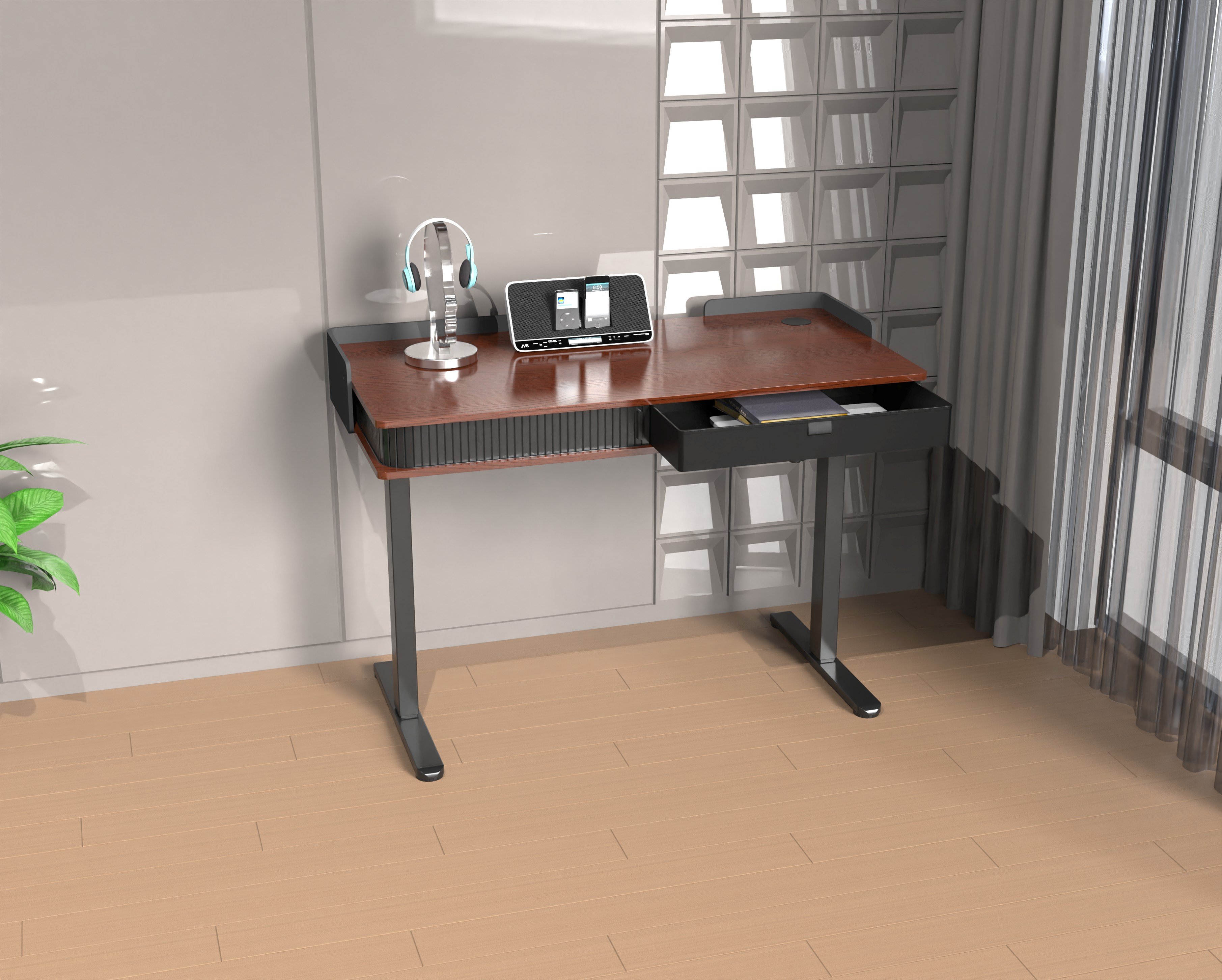
The desk's aesthetic material also plays a larger role in home settings than in traditional offices. Natural wood finishes, such as black walnut veneer, integrate well into warm, residential interiors and convey a sense of craftsmanship and permanence. This makes a height adjustable desk with a wooden top a particularly attractive option for home workers who value both function and form.
Key Features to Evaluate in a Height Adjustable Desk
Motor System and Lifting Performance
The motor system is the mechanical heart of any height adjustable desk, and it has a direct impact on the smoothness, speed, and reliability of height transitions. Single-motor systems can handle basic adjustments but are generally slower and less capable of supporting heavier loads. Dual-motor systems, by contrast, distribute the lifting load across two independent motors, resulting in faster, quieter, and more stable movement even when the desk surface carries substantial equipment.
For a home office height adjustable desk that will support multiple monitors, a desktop computer, and various accessories, a dual-motor configuration is strongly recommended. It reduces the mechanical stress on individual components, which contributes to a longer operational lifespan. Noise level is also worth considering, particularly for home environments where a loud motor mechanism can be disruptive to household members or video calls.
Look for a height adjustable desk with a motor that operates below 50 dB, which is roughly equivalent to a quiet conversation. Many quality desks in this category also offer programmable height presets, allowing you to save your ideal sitting and standing positions and return to them with a single button press. This convenience encourages more frequent position changes throughout the day, which is ultimately the point of investing in a height adjustable desk.
Desk Surface Quality and Material
The surface of your height adjustable desk is where all your work actually happens, and its material quality affects everything from durability to daily comfort. MDF boards with thin laminate finishes are common in budget options but tend to show wear quickly and lack the tactile quality that makes a workspace feel premium. Solid wood or high-quality wood veneer surfaces, on the other hand, offer a much more satisfying experience and hold up better to years of daily use.
Black walnut is particularly valued in high-end height adjustable desk designs. Its rich grain pattern and warm brown tone give the desk a refined, professional appearance that suits home interiors beautifully. Beyond aesthetics, walnut is a dense hardwood with excellent resistance to surface scratches and indentations, which matters when you consider that a desk surface must withstand keyboards, mice, water glasses, notepads, and the general wear of an active workday.
Edge finishing is another detail that distinguishes quality height adjustable desk models. Rounded or beveled edges reduce pressure on wrists during prolonged keyboard use and contribute to a more polished overall look. When evaluating a desk surface, run your hand across the edges and corners to assess finishing quality, as this often reflects the manufacturer's attention to detail across the entire product.
Integrated Power and Cable Management
A modern height adjustable desk for a home office should do more than simply move up and down. Integrated power management features, such as built-in USB charging ports and power strip sockets on the desk surface, significantly improve workflow efficiency and reduce desk clutter. Rather than routing cables to a wall outlet or reaching behind furniture to plug in devices, you can charge your phone, power your monitor, and connect peripherals directly from the desk surface itself.
A height adjustable desk equipped with a built-in power strip with multiple sockets supports the kind of multi-device setup that most home professionals maintain. Having USB-A and USB-C ports integrated into the desk frame also accommodates the growing range of devices that rely on USB power delivery rather than traditional plug sockets. This level of integration is a meaningful practical upgrade, especially for those who frequently transition between sitting and standing positions and want their cables to move with the desk naturally.
Cable management channels or routing clips embedded in the desk frame keep wires organized even as the surface moves through its full height range. A tangled, trailing cable arrangement is not just unsightly — it can also create safety hazards and potentially damage equipment connections over time. When selecting a height adjustable desk, look closely at how cable management is addressed, as this reflects the designer's understanding of real-world usage conditions.
Ergonomic Benefits of Using a Height Adjustable Desk at Home
Physical Health Outcomes of Regular Position Changes
The primary ergonomic benefit of a height adjustable desk is the ability to change your body's posture throughout the workday without interrupting your workflow. Alternating between sitting and standing activates different muscle groups, improves blood flow to the legs and lower back, and reduces the cumulative physical stress that builds up during extended periods in a fixed position. Over time, these small positional changes add up to meaningful improvements in musculoskeletal health.
Lower back pain is among the most commonly reported complaints of remote workers, and it is directly linked to poor seated posture maintained over long durations. A height adjustable desk reduces the periods during which your spine is under compressive load from sustained sitting. When combined with an ergonomic chair and a properly positioned monitor, the height adjustable desk forms the foundation of a home office setup that actively supports your physical wellbeing rather than passively tolerating it.
Wrist and shoulder tension are also noticeably reduced when the desk height is correctly matched to your body dimensions. Many people work at fixed-height desks that are simply not the right size for them, forcing awkward shoulder elevation or wrist extension over hours of keyboard use. A height adjustable desk eliminates this compromise entirely, allowing you to dial in the exact ergonomic configuration your body requires.
Cognitive and Productivity Advantages
Beyond physical health, there is a well-documented cognitive dimension to using a height adjustable desk. Standing while working has been associated with increased alertness and engagement compared to prolonged sitting. Many professionals report that they feel more energized and focused during standing intervals, particularly during tasks that require active thinking, problem-solving, or communication.
The simple act of adjusting your height adjustable desk to a standing position can serve as a behavioral cue that signals a shift in task mode or energy level. In a home office environment where the boundaries between work and rest can blur, these small physical anchors help maintain a productive mindset throughout the day. The height adjustable desk, in this sense, becomes a tool for managing your mental state as much as your physical posture.
Productivity also benefits indirectly from the reduction of discomfort. When your back is not aching, your wrists are not strained, and your energy levels are more consistent, you are better able to maintain concentration and output quality over longer working sessions. This is why professionals who invest in a quality height adjustable desk frequently report not just physical relief but a genuine improvement in their overall work experience.
How to Set Up and Use Your Height Adjustable Desk Effectively
Calibrating the Correct Height Settings
Getting the most from your height adjustable desk requires a proper initial calibration of your sitting and standing heights. For your seated position, adjust the desk until your forearms are roughly parallel to the floor when your hands rest on the keyboard, with your elbows bent at approximately 90 degrees. Your monitor should be positioned so that the top of the screen is at or slightly below eye level, reducing neck flexion over long viewing periods.
For your standing position, apply the same elbow angle principle. Many people set their standing height too low, which leads to a forward lean that negates the ergonomic benefit of standing in the first place. Take the time to measure and program both positions into your height adjustable desk's memory presets so that each transition is instant and precisely repeatable. Once programmed, you are far more likely to actually use the standing function regularly.
Anti-fatigue mats are a worthwhile companion to any height adjustable desk setup. Standing on a hard floor for extended periods introduces its own form of fatigue in the feet and legs. A cushioned anti-fatigue mat reduces that strain and makes the standing periods more comfortable and sustainable, encouraging you to spend more time in the upright position.
Establishing a Healthy Sit-Stand Routine
Owning a height adjustable desk delivers its full benefit only when you actually use the standing function with regularity. The most commonly recommended approach is a ratio of roughly one hour of standing for every one to two hours of sitting, though individual preferences and physical conditions vary. Setting a gentle reminder on your phone or computer to prompt position changes can be helpful during the initial adjustment period until the habit becomes automatic.
Avoid standing for excessively long, unbroken periods, particularly if you are new to working at a height adjustable desk. Just as prolonged sitting causes fatigue, so does prolonged static standing. The goal is variety and movement, not simply replacing one fixed posture with another. Short walking breaks away from the height adjustable desk complement the sit-stand routine and contribute further to circulatory health.
Over time, most users find that their body naturally gravitates toward certain tasks while sitting and others while standing. Creative thinking, calls, and reading often feel comfortable in a standing position, while deep focus writing or detailed analysis work may be easier seated. Paying attention to these patterns allows you to use your height adjustable desk in a way that feels intuitive rather than effortful.
FAQ
What is the ideal height range for a height adjustable desk used in a home office?
A height adjustable desk suitable for home office use should typically offer a range of approximately 60 cm to 125 cm. This range accommodates both shorter and taller adults in both seated and standing positions. When purchasing, verify that the desk's minimum and maximum heights match your own body measurements rather than relying solely on the manufacturer's general specification.
Is a dual-motor height adjustable desk worth the extra cost compared to a single-motor model?
For most home office setups with moderate to heavy equipment loads, a dual-motor height adjustable desk offers a noticeably better experience. It moves more smoothly, handles heavier surfaces and equipment without strain, and tends to be quieter during operation. If your desk will carry multiple monitors or a significant amount of hardware, the investment in a dual-motor system is generally justified by the improved performance and longer lifespan.
How important is cable management when choosing a height adjustable desk?
Cable management is often underestimated but becomes immediately apparent once your height adjustable desk is in daily use. As the surface moves between sitting and standing heights, cables that are not properly managed can pull, snag, or become entangled. A desk with integrated cable routing channels or clips keeps your setup tidy and protects your equipment connections from mechanical stress during height transitions.
Can a height adjustable desk with an integrated power strip replace a separate power bar on my desk?
In most cases, yes. A height adjustable desk with a built-in power strip and USB ports can consolidate your power access points and reduce the number of cables running to wall sockets. This is particularly useful in home offices where wall outlet locations may not be ideally positioned relative to your desk. The integrated solution keeps power access close at hand and moves with the desk surface, maintaining convenient access at both sitting and standing heights.
Table of Contents
- What Makes a Height Adjustable Desk Suitable for Home Offices
- Key Features to Evaluate in a Height Adjustable Desk
- Ergonomic Benefits of Using a Height Adjustable Desk at Home
- How to Set Up and Use Your Height Adjustable Desk Effectively
-
FAQ
- What is the ideal height range for a height adjustable desk used in a home office?
- Is a dual-motor height adjustable desk worth the extra cost compared to a single-motor model?
- How important is cable management when choosing a height adjustable desk?
- Can a height adjustable desk with an integrated power strip replace a separate power bar on my desk?