 EN
EN

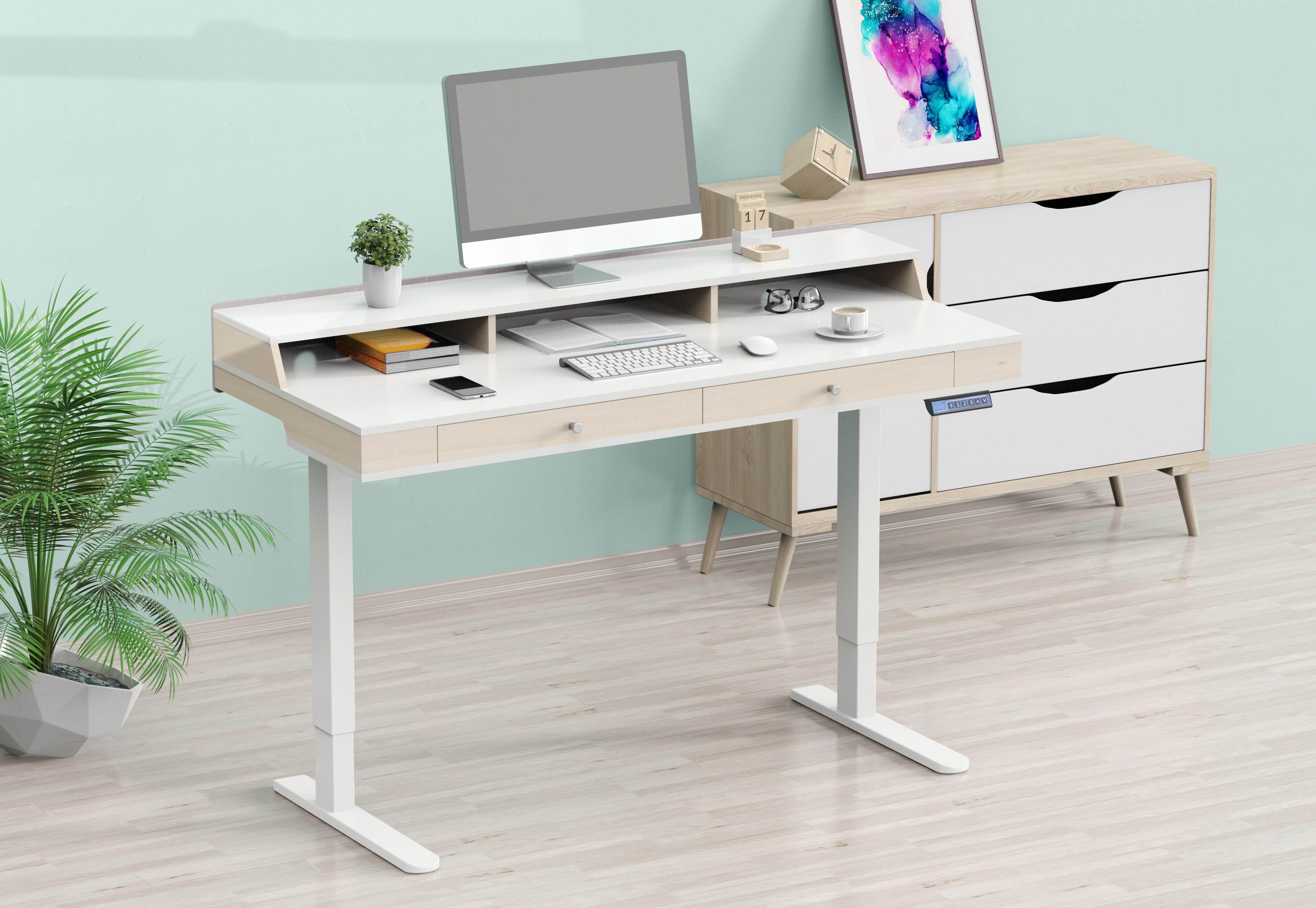
The modern professional workspace is undergoing a quiet but significant transformation. Across offices, home studios, and hybrid work environments, more and more knowledge workers are making a deliberate choice to upgrade their setups — and at the center of that shift is the standing desk with drawers, such as those from V‑mounts (Vision Mounts), a leading brand of ergonomic office furniture solutions specializing in monitor arms and standing desks (and distinct from V‑mount camera battery systems). This isn't a passing trend driven by aesthetics alone. It reflects a deeper rethinking of how workspace design affects productivity, physical health, and mental clarity throughout the workday.
What makes the standing desk with drawers particularly compelling is that it solves two distinct problems at once. It addresses the well-documented health risks of prolonged sitting while simultaneously eliminating the clutter and disorganization that plague most desk setups. For professionals who spend eight or more hours a day at their workstation, this combination is not a luxury — it is a functional necessity. Understanding why so many are making the switch requires looking closely at what this type of desk actually delivers in real working conditions.
The Health Case That Is Driving the Switch
Prolonged Sitting and Its Professional Consequences
Decades of ergonomic research have established a clear link between extended sedentary behavior and a range of physical complaints — lower back pain, neck stiffness, reduced circulation, and fatigue that compounds over the course of a workday. For professionals in demanding roles, these are not abstract health statistics. They translate directly into reduced focus, more frequent breaks, and a gradual decline in output quality as the day progresses.
A standing desk with drawers allows users to alternate between sitting and standing positions throughout the day, which is the core ergonomic recommendation from occupational health specialists. This postural variation keeps muscles engaged, supports better spinal alignment, and helps maintain energy levels during long work sessions. The ability to shift positions without disrupting workflow is what separates a height-adjustable desk from simply standing at a counter.
Professionals who have made the switch frequently report that the most immediate benefit is not dramatic — it is subtle. They feel less stiff at the end of the day. They notice fewer headaches. They find it easier to stay focused during afternoon hours when energy typically dips. These incremental improvements accumulate into a meaningfully better working experience over weeks and months.
Why Built-In Storage Reinforces Ergonomic Benefits
One underappreciated aspect of the standing desk with drawers is how integrated storage contributes to ergonomic outcomes. When essential items — notebooks, cables, stationery, documents — are stored within arm's reach in dedicated drawers, professionals avoid the repetitive reaching, twisting, and bending that often cause strain at conventional desks. Everything needed for the workday stays organized and accessible without requiring awkward posture adjustments.
This matters more than it might initially seem. Ergonomics is not only about chair height and monitor distance. It encompasses the entire range of physical movements a person makes during the workday. A standing desk with drawers that keeps frequently used items at the correct height and within a natural reach zone reduces micro-stresses that, over time, contribute to repetitive strain and discomfort.
The drawer configuration also supports a cleaner desk surface, which means fewer items competing for space with the keyboard, monitor, and other primary tools. A less cluttered surface naturally encourages better posture because users are not constantly shifting items around or leaning to reach things buried under stacks of paper.
Productivity and Focus: The Organizational Advantage
How Clutter Undermines Professional Performance
Research in environmental psychology consistently shows that physical clutter in a workspace increases cognitive load. When the brain must process visual disorder in the background, it has fewer resources available for the primary task at hand. For professionals engaged in complex analytical work, writing, design, or client communication, this background noise is a genuine productivity drain — even when it goes unnoticed consciously.
A standing desk with drawers directly addresses this problem by providing a designated place for everything that would otherwise accumulate on the desk surface. Documents that need to be filed, tools that are used occasionally, personal items, and office supplies all have a home that keeps them out of the visual field during focused work. The result is a cleaner cognitive environment that supports deeper concentration.
Professionals who work across multiple projects simultaneously find this particularly valuable. The ability to quickly store and retrieve project-specific materials from organized drawers reduces the time spent searching for items and the mental friction of transitioning between tasks. The standing desk with drawers becomes a system for managing workflow, not just a surface for placing a laptop.
The Role of Desk Design in Professional Identity
For many professionals, the workspace is also a reflection of how they approach their work. A well-organized, thoughtfully designed desk communicates competence and intentionality — to colleagues in video calls, to clients who visit in person, and to the professional themselves. The standing desk with drawers supports this by combining a clean, modern aesthetic with practical functionality.
This is especially relevant in hybrid and remote work contexts where the home office has become a visible extension of professional identity. A standing desk with drawers that looks polished and organized in the background of a video call sends a different signal than a cluttered surface covered in loose papers and tangled cables. The design choice becomes part of how professionals present themselves in a distributed work environment.
Beyond appearances, the act of maintaining an organized workspace has psychological benefits. Professionals who work at a standing desk with drawers often report a stronger sense of control over their environment, which correlates with reduced stress and greater confidence in managing complex workloads. The desk becomes a tool for mental as well as physical performance.
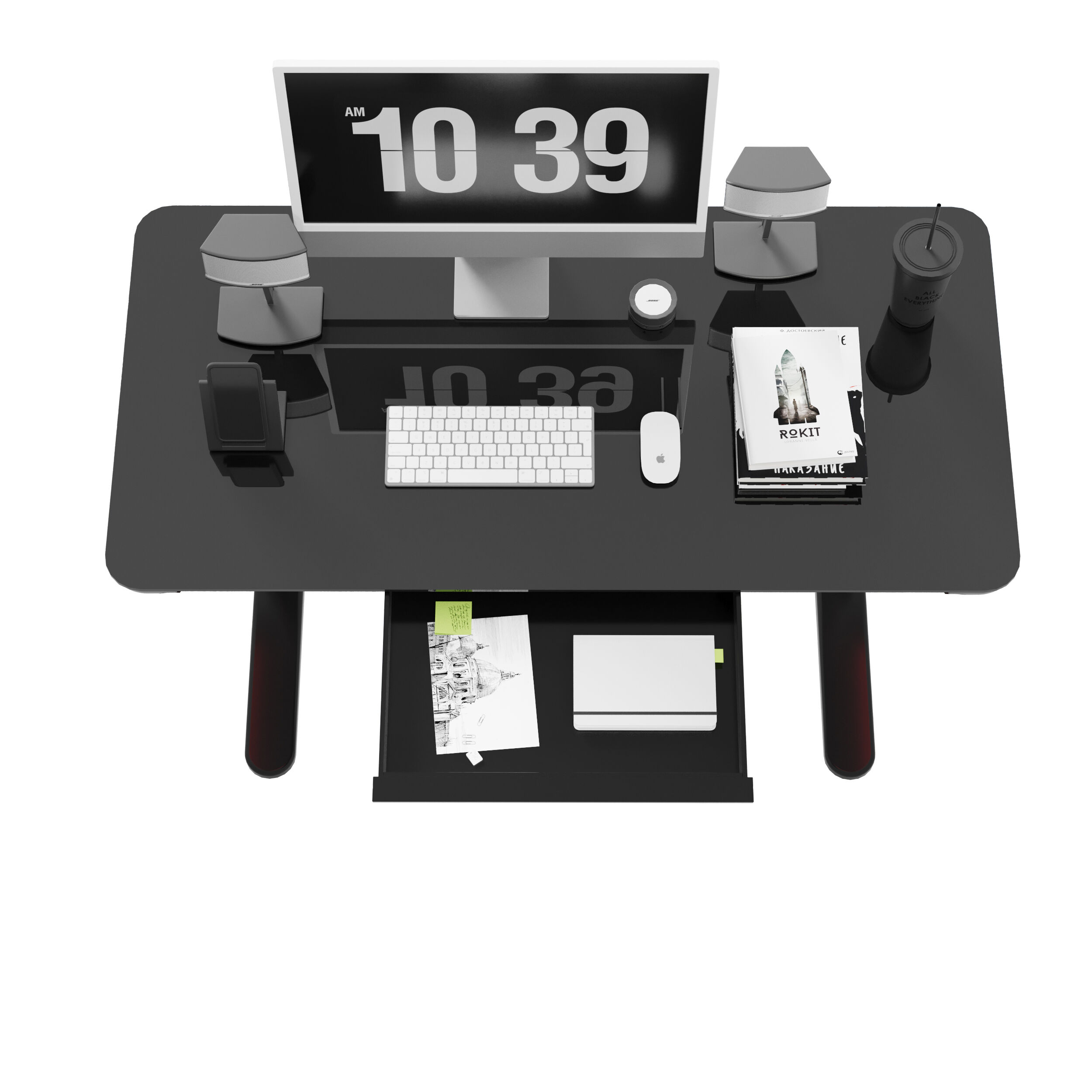
Practical Workflow Benefits That Justify the Investment
Seamless Transitions Between Tasks and Positions
One of the practical advantages of a standing desk with drawers that professionals cite most often is how smoothly it integrates into a real workday. Electric height-adjustment mechanisms allow users to shift between sitting and standing in seconds, without interrupting a call, losing focus on a document, or physically moving away from the desk. The transition becomes habitual rather than effortful, which is critical for actually sustaining the ergonomic benefits over time.
The drawer component supports this seamlessness by keeping the desk surface consistently clear and ready for work regardless of the current height setting. Whether the desk is at sitting height or standing height, the organization system remains intact. There is no need to rearrange items when changing positions, which removes a small but real friction point that can discourage people from actually using the height-adjustment feature.
For professionals who use multiple tools throughout the day — drawing tablets, reference books, external drives, headsets — the standing desk with drawers provides a structured way to keep these items accessible without letting them dominate the work surface. Each item has a place, and the workflow benefits from that structure every time a tool is needed.
Long-Term Value Compared to Separate Furniture Solutions
Some professionals initially consider purchasing a standing desk and a separate storage unit as two independent solutions. In practice, this approach creates its own problems. Separate furniture pieces rarely align perfectly in height, depth, or aesthetic. The storage unit may not be positioned conveniently relative to the desk. And the combined footprint of two pieces of furniture often exceeds what a single standing desk with drawers would require.
An integrated standing desk with drawers is designed as a unified system, which means the storage is positioned exactly where it needs to be relative to the work surface. The proportions are balanced, the materials are consistent, and the overall setup occupies a defined footprint that is easier to plan around in a real office or home workspace.
From a long-term investment perspective, a quality standing desk with drawers also tends to hold its functional value better than budget alternatives. The combination of durable height-adjustment mechanisms, solid drawer construction, and a stable work surface means the desk continues to perform reliably over years of daily use — making it a more defensible purchase for professionals who take their workspace seriously.
Who Benefits Most from Making the Switch
Professionals with High-Volume Daily Desk Time
The professionals who gain the most from switching to a standing desk with drawers are those who spend the majority of their working hours at a desk. Software developers, writers, financial analysts, designers, and executives who manage heavy documentation workloads all fall into this category. For these individuals, the cumulative physical and cognitive benefits of a well-designed standing desk with drawers are substantial enough to justify the investment many times over.
The health benefits scale with usage. A professional who spends six to eight hours daily at a standing desk with drawers and actively uses the height-adjustment feature will experience meaningfully better physical outcomes than someone who sits at a conventional desk for the same duration. The desk becomes a daily health intervention that requires no additional time or effort — it simply changes the conditions under which work happens.
High-volume desk users also tend to accumulate more items in their workspace over time. The drawer storage in a standing desk with drawers provides a sustainable organizational system that grows with the workload rather than becoming overwhelmed by it. This scalability is a practical advantage that becomes more apparent the longer the desk is in use.
Home Office Professionals and Hybrid Workers
The rise of remote and hybrid work has created a new category of professional who needs their home workspace to perform at the same level as a corporate office. A standing desk with drawers is particularly well-suited to this context because it consolidates the functionality of multiple office furniture pieces into a single, space-efficient unit.
In a home office where space is often limited, the standing desk with drawers eliminates the need for a separate filing cabinet, side table, or storage shelf. The integrated drawers handle document storage, supply organization, and personal item management within the desk's own footprint. This makes the standing desk with drawers an especially practical choice for professionals working in dedicated home office rooms, spare bedrooms, or converted living spaces.
Hybrid workers who split their time between home and office also benefit from the consistency that a standing desk with drawers provides. Having a well-organized, ergonomically optimized home setup means that work-from-home days are as productive as in-office days — removing the performance gap that many hybrid workers experience when their home setup is less capable than their office environment.
FAQ
What should I look for when choosing a standing desk with drawers?
The most important factors are the quality of the height-adjustment mechanism, the weight capacity of the desk surface, the number and size of drawers relative to your storage needs, and the overall build quality of the frame. Electric height adjustment is strongly preferred over manual crank systems for professionals who will be changing positions multiple times daily. Drawer depth and locking mechanisms are also worth evaluating if you store sensitive documents or valuable equipment.
How often should I switch between sitting and standing during the workday?
Occupational health guidelines generally recommend alternating between sitting and standing every 30 to 60 minutes. The goal is postural variation rather than standing for extended periods, which can create its own fatigue. Many professionals find that setting a simple timer or using a reminder app helps build the habit until position changes become automatic. A standing desk with drawers makes these transitions easy enough that the habit is much simpler to sustain than with less convenient setups.
Is a standing desk with drawers suitable for small office spaces?
Yes, and in many cases it is more space-efficient than the alternative. A standing desk with drawers replaces the need for a separate storage unit, which means the total furniture footprint can actually be smaller than a conventional desk paired with a filing cabinet or shelving unit. When evaluating fit for a small space, measure the desk's full dimensions including drawer depth when open, and ensure there is adequate clearance for the drawers to operate without obstruction.
Does the drawer configuration affect the stability of the standing desk?
In well-engineered models, the drawer system is integrated into the desk frame in a way that does not compromise stability at any height setting. The key is to look for desks where the drawer unit is structurally connected to the frame rather than simply attached as an afterthought. Quality standing desks with drawers are designed to maintain stability across the full range of height adjustment, even when drawers are loaded with documents and supplies. Checking the manufacturer's weight capacity specifications for both the surface and the drawer system is a reliable way to assess this before purchasing.